Freezing image, "squares" during rain, and strange errors on the screen? In most cases, the problem is not "with the operator," but rather how the satellite dish, LNB, coaxial cable, and satellite receiver are installed and configured. Here, we briefly summarize what quality installation of satellite television includes, typical mistakes, and how to compare offers to watch comfortably – in any weather.
What does quality installation include
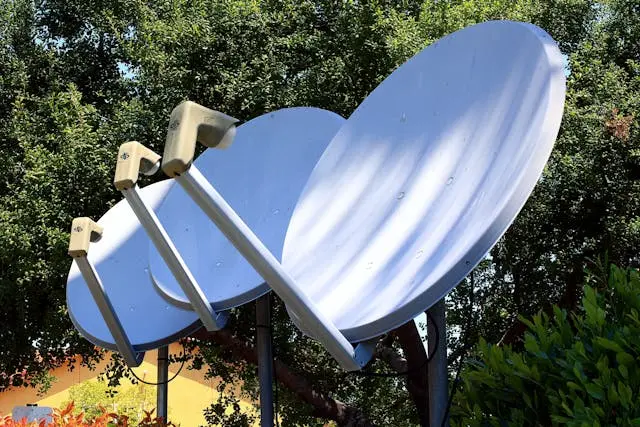
• Selection of a location for the dish: stable base, "clear" view of the satellite, minimal obstacles.
• Secure fastening: brackets/anchors according to the facade; no vibrations in the wind.
• Correct LNB and skew angle for the precise position of the satellite.
• Cable infrastructure: UV-resistant coaxial cable, proper connectors, barriers/grommets through the walls.
• Receiver and TV setup: scanning transponders, sorting channels, language/EPG.
• Test in bad weather: a real check of quality/signal level, not just "works for the moment."
💡 The professional team also leaves a brief diagram/description (where the routes run), which helps with future repairs or the addition of a second receiver.
Mini case: why the "cheap" installation ends up costing double
The client orders a quick installation with the "lowest price." After the first serious rain, the picture disappears. A check shows: vibrations in the stand, a compromised connector, and a coaxial cable run without a sleeve through the frame. The result – reinstallation, new materials, and lost hours.
Conclusion: the right fasteners and materials are part of quality, not an "additional luxury."
How to recognize common mistakes
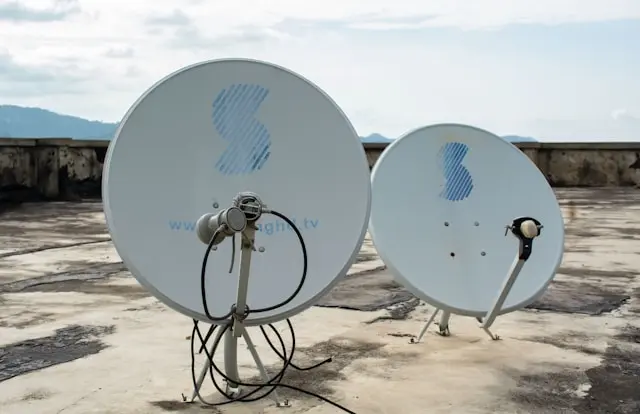
• The satellite dish is "slightly off" → works in the sun, loses signal in clouds.
• Weak supports/anchors → micro-vibrations, pixelation.
• LNB without precise skew → good signal on some channels, bad on others.
• Poor quality or excessively long cable → attenuation, especially with 4K channels.
• No grounding/protection → risk to the receiver/TV during thunderstorms.
Useful reading: Advantages of Hiring a Cleaning Master for Apartments
Offer checklist: compare fairly
1. Inspection and selection of position (are obstacles/angle of visibility described).
2. Fasteners and materials (rack, anchors, type of coaxial cable, connectors).
3. Targeting and measurement (with a satellite meter, not "by eye").
4. Receiver settings (scanning, sorting, language, parental control).
5. Warranty and Support (response to issues; what is covered).
6. Aesthetics and routing (hidden/discreet, through conduits; without "free" cables).
Myth / Fact
Myth: "If it catches a signal once, it means it's good."
Fact: the stable installation performs equally in wind, rain, and cold. The "data check" (SNR/BER) is mandatory.
Myth: "Every LNB is the same."
Fact: there are significant differences; the correct model and skew directly affect quality.
How long does it take and what does the price depend on
The installation of a satellite antenna + receiver setup usually takes 1.5–3 hours with standard access. The price depends on:
• type and size of the satellite dish;
• access complexity (facade/roof, height, need for a climber);
• length and route of the coaxial cable;
• additional points/branches (second receiver/tv);
• need for additional fasteners/grounding/protection.
More useful: Why do the services at Ofertirai.me start with a question instead of a fixed offer? — why the accurate specification brings a better price and result.
Common scenarios in which to call a specialist
• Relocation/new home: need for new positioning and route to living room/bedrooms.
• Upgrade to 4K/multi-letter package: requires more precise alignment and quality cable.
• Adding a second point: branching without proper splitters = problems in both rooms.
• Restart/errors of the receiver: they are often a result of a weak signal, not "software".
• Seasonal issues: signal disappears during rain/snow → check of mounts, LNB, and connectors.
Mini-FAQ
Is a permit required for facade installation? In the case of condominium ownership, check the rules/consent of the building.
Can installation be done without visible cables? Yes — with a planned route and conduits; it is often combined with plaster/paint for a clean finish.
Does a larger dish help? Yes, it increases the "reserve" of the signal, but the installation must be stable and well-aligned.
Conclusion:
Satellite television is reliable when the installation and setup are done correctly: a stable base, accurate skew, good materials, and signal measurement. This way, you forget about the "squares" and enjoy a picture in any weather. Order a detailed quote from verified specialists, compare stages and guarantees — and watch with peace of mind.